Home
Performance
News
About

中
EN
Fingertip Splendor · Symphony in the Ears
Show Details
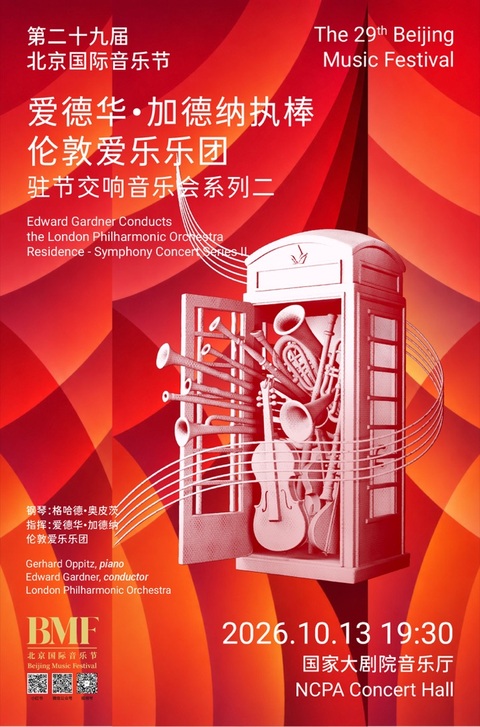
Fingertip Splendor · Symphony in the Ears
Edward Gardner Conducts the London Philharmonic Orchestra — Residency Series II
19:30 · Tuesday, October 13, 2026 · NCPA Concert Hall
Edward Gardner, conductor · Gerhard Oppitz, piano · London Philharmonic Orchestra
Out of Don Giovanni's Shadow, into Brahms's Sunlight
Highlights
This is the second program of Edward Gardner and the London Philharmonic's festival residency. Where the previous evening mapped the terrain between Mendelssohn and Mozart, tonight follows a more dramatic arc: setting out from Mozart at his darkest and most intense, and arriving in the sunlit pastoral of Brahms.

The concert opens with the Overture to Don Giovanni — the tale of the libertine dragged down to hell. Its grim D minor chords are fate's first knock at the door, and within minutes the listener is caught in Mozart's theatrical whirlpool. There follows the Piano Concerto No. 20 in D minor, one of only two minor-key piano concertos Mozart wrote, whose storm-tossed passion made it a herald of the Romantic concerto — two works quietly linked by their shared key of D minor. The soloist is the German master Gerhard Oppitz. A direct pupil of the legendary Wilhelm Kempff, Oppitz is widely regarded as a true heir to the Austro-German performing tradition: playing of nobility and depth, rigorous in structure, generous in breath. In this most dramatic of Mozart's concertos he offers the force of the storm — and a master's poise.
After the interval, Gardner and the orchestra turn to Brahms's Symphony No. 2 in D major, the sunniest and warmest of his four, composed in a single happy summer on the shores of an Austrian lake and often called his “Pastoral.” From Mozart's D minor darkness to Brahms's D major radiance, the evening travels from tempest into open skies — a complete drama of darkness turning to light.
Program Notes
Wolfgang Amadeus Mozart: Overture to Don Giovanni, K. 527
Premiered in Prague in 1787, Don Giovanni is one of the three operas Mozart created with Lorenzo Da Ponte. The overture opens with slow, dread-laden D minor music that will return at the opera's climax, when the stone guest arrives to claim the unrepentant libertine — the sound of a doom that cannot be escaped. Then the music breaks into a quicksilver Allegro, as if sketching Giovanni's reckless appetite for pleasure. Legend has it that Mozart dashed off the overture on the night before the premiere; what he produced is among the most dramatic opening statements in the history of opera — light against darkness, pleasure against judgment, all foretold within minutes. Revered by many as “the opera of operas,” Don Giovanni fuses comic wit and tragic grandeur around one of Western culture's most complex and fascinating anti-heroes; this brief overture is the doorway into that world of temptation, sin and reckoning.
Wolfgang Amadeus Mozart: Piano Concerto No. 20 in D minor, K. 466
Completed in 1785, this concerto is one of only two Mozart wrote in the minor — and the more turbulent of the pair. It begins with dark syncopated murmurs welling up from the depths of the orchestra, an ominous theatrical undertow far removed from the customary elegance of his concertos. The “Romanze” second movement sings with the utmost tenderness until a sudden squall tears through its heart; the finale races onward in D minor fire, only to end in blazing D major light. Beethoven loved this work, performed it often, and wrote for it the cadenzas most often heard to this day — one of tonight's quiet pleasures: hearing another titan's unmistakable handwriting inside Mozart's frame. Its drama and its symphonic sweep opened the road along which Beethoven and the Romantics would carry the piano concerto.
Johannes Brahms: Symphony No. 2 in D major, Op. 73
In the summer of 1877, in the idyllic lakeside village of Pörtschach in southern Austria, Brahms wrote this symphony within a single season. After the First — two decades in the making, somber and monumental — the Second radiates ease, warmth and light, earning its nickname as Brahms's “Pastoral.” The tranquil opening theme in cellos and horns sets a tone of meadow-song; yet beneath the sunshine Brahms's characteristic gravity remains — harmonic shadows drift across the landscape, lending the idyll its quiet complexity. The finale sweeps all brooding aside and races, trombones blazing, to one of the most exhilarating conclusions in the symphonic literature. Brahms, ever the ironist, warned a friend that the new symphony was “so melancholy you will not be able to bear it” — and then delivered the most radiant music he ever wrote: a rare flash of humor from the sternest of masters.
Gerhard Oppitz|Piano
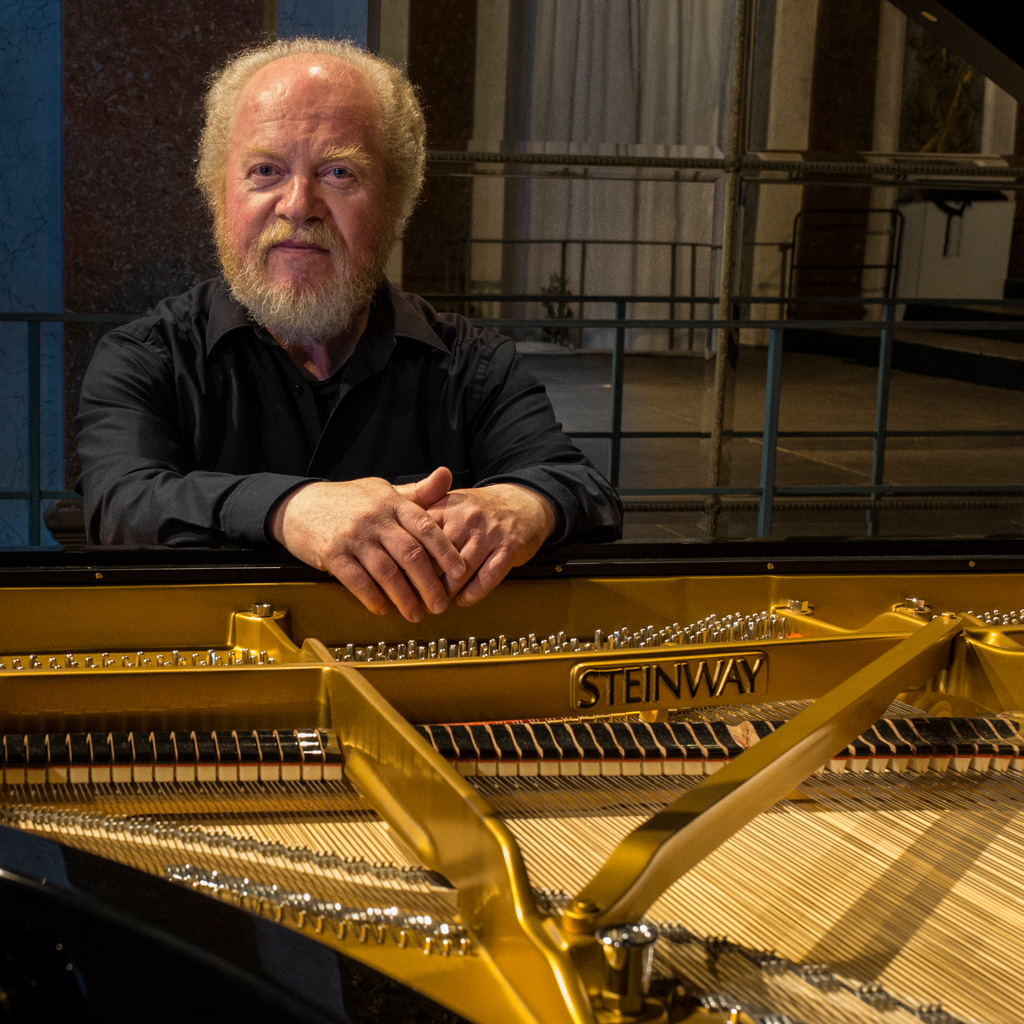
Gerhard Oppitz’s international career began in 1977, when he became the first German pianist to win the Gold Medal at the Arthur Rubinstein International Piano Competition in Tel Aviv, with the 90-year-old Rubinstein himself serving on the jury. Concert tours throughout Europe, Japan and the United States followed, together with his first recordings. To date, Oppitz has made more than one hundred recordings.
In 1981, Oppitz was appointed Professor at the Hochschule für Musik und Theater München, a position he held until 2013. Over the course of his artistic career, he has collaborated with legendary conductors including Carlo Maria Giulini, Wolfgang Sawallisch, Sir Colin Davis, Zubin Mehta and Riccardo Muti. Many of these collaborations are documented in CD and video recordings.
Oppitz has repeatedly performed complete cycles of works in concert, including Bach’s The Well-Tempered Clavier, the complete sonatas of Beethoven, Schubert and Mozart, the piano works of Grieg and, above all, the complete piano works of Johannes Brahms. He has performed the complete Brahms sonata cycle in Europe, the United States and Japan, and presented eleven full programmes of Schubert’s solo works at the Rheingau Music Festival.
In 1990, he completed a recording of the complete piano works of Brahms. In 1993, he recorded Brahms’s two piano concertos with Sir Colin Davis and released a complete edition of Edvard Grieg’s piano works. Between 1995 and 1996, he recorded the complete Beethoven piano concertos with the Leipzig Gewandhaus Orchestra under Marek Janowski. In 1997, he again collaborated with Sir Colin Davis and the Bavarian Radio Symphony Orchestra on a complete recording of Carl Maria von Weber’s works for piano and orchestra. Recent releases include sonatas by Beethoven and Schubert, a recording of Japanese piano music and the complete piano works of Robert Schumann.
In 2009, Oppitz received the Brahms Prize from the Brahms Society Schleswig-Holstein, previously awarded to Leonard Bernstein and Yehudi Menuhin. Since 2014, he has also been a recipient of the Maximilian Order for Science and Art, the highest honour bestowed by the State of Bavaria.

Edward Gardner|Conductor
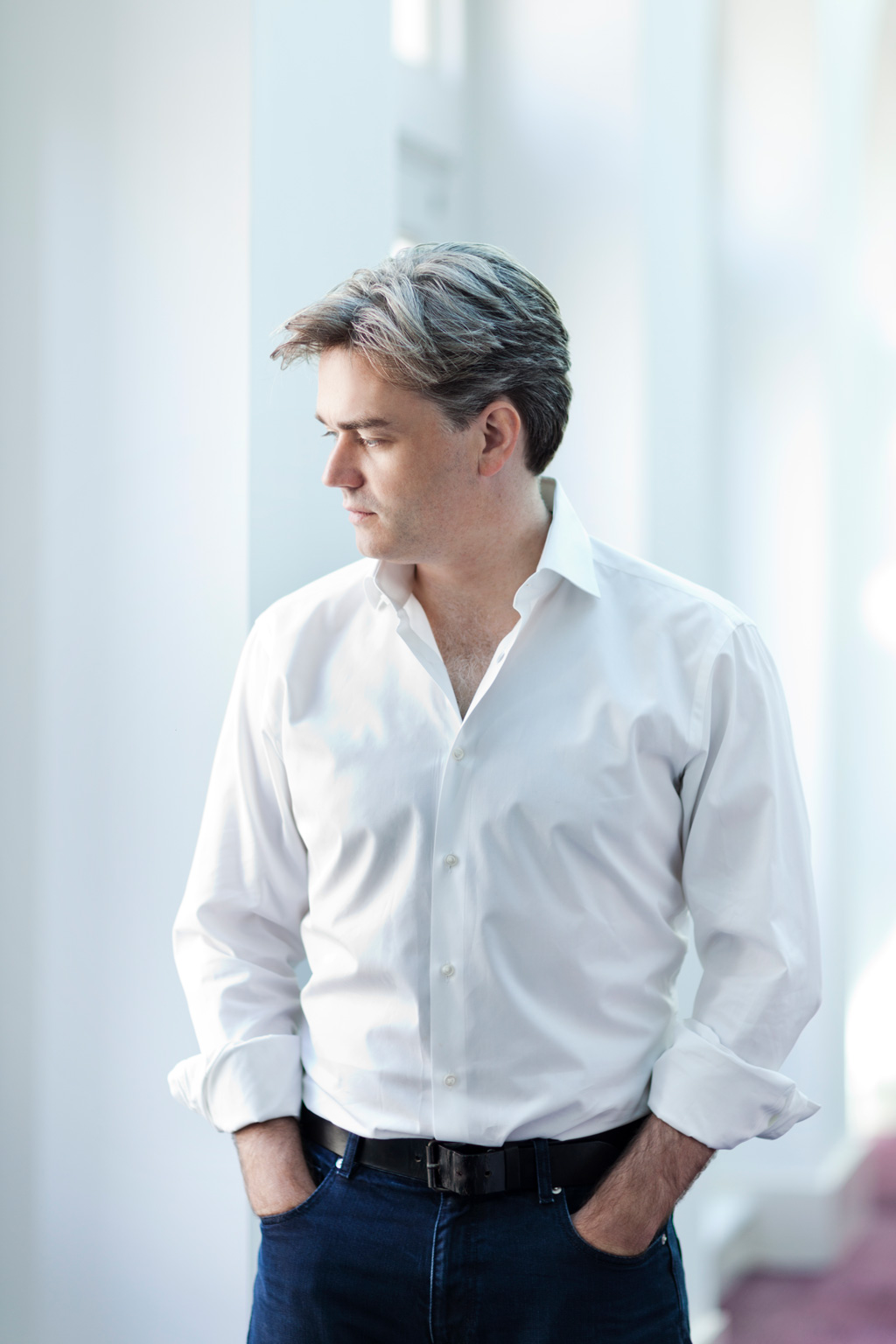
“A conducting force to be reckoned with” (The New York Times), leading British conductor Edward Gardner is Principal Conductor of the London Philharmonic Orchestra and Music Director of the Norwegian Opera and Ballet. He is also Honorary Conductor of the Bergen Philharmonic Orchestra and a three-time Gramophone Award winner.
Gardner is active on both the symphonic and operatic stages, conducting leading ensembles and opera houses including the New York Philharmonic, Staatskapelle Berlin, Chicago Symphony Orchestra, Philadelphia Orchestra, Cleveland Orchestra, Teatro alla Scala and the Royal Opera House.
He served as Music Director of English National Opera from 2007 to 2015 and has maintained strong relationships with the Metropolitan Opera, Bavarian State Opera, Glyndebourne Festival Opera, Opéra National de Paris and Teatro alla Scala.
Gardner has made numerous acclaimed recordings, including Tippett’s The Midsummer Marriage, Britten’s Peter Grimes, Wagner’s Der fliegende Holländer, Richard Strauss’s Salome and Tania León’s Raíces (Origins).
A passionate supporter of young talent, Gardner founded Manchester’s Hallé Youth Orchestra in 2002. In 2014, he was appointed the inaugural Sir Charles Mackerras Conducting Chair at the Royal Academy of Music. His honours include the Royal Philharmonic Society’s Conductor of the Year Award, an Olivier Award for Outstanding Achievement in Opera, the Sibelius Prize and an OBE for Services to Music.

London Philharmonic Orchestra
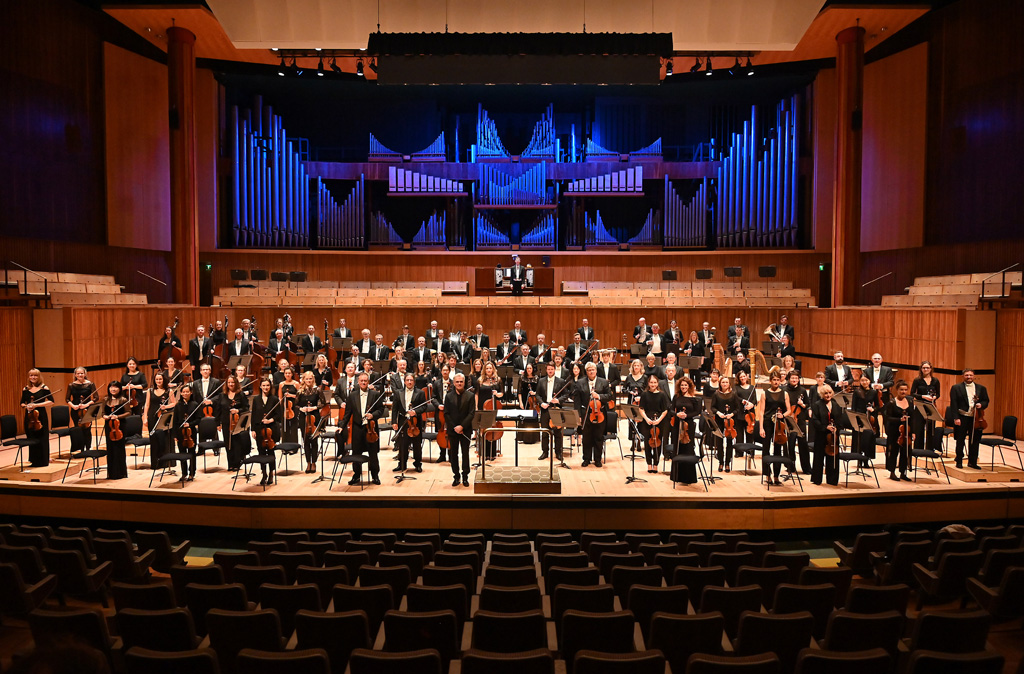
Founded in 1932, the London Philharmonic Orchestra is recognised as one of the world’s leading orchestras, celebrated for its artistic excellence, versatility, invention and inclusivity.
The orchestra’s home is the Southbank Centre’s Royal Festival Hall. It also performs regularly in Brighton, Eastbourne and Saffron Walden, as well as on tour worldwide. For more than 60 years, the London Philharmonic Orchestra has been the Resident Symphony Orchestra at Glyndebourne Festival Opera.
The orchestra has accompanied many memorable moments in modern cultural history, from performing national anthems at the medal ceremonies of the London Olympic and Paralympic Games, to its iconic recording with Pavarotti of Nessun Dorma. It has also featured on major film soundtracks, including The Lord of the Rings.
The orchestra’s Principal Conductors have included Sir Adrian Boult, Bernard Haitink, Klaus Tennstedt and Kurt Masur. Edward Gardner became its 13th Principal Conductor in 2021. Vladimir Jurowski is Conductor Emeritus, Karina Canellakis is Principal Guest Conductor and Sir George Benjamin is Composer-in-Residence.
The LPO is committed to nurturing the next generation of musicians and music lovers through concerts, workshops, teaching resources and training programmes. Its OrchLab and Open Sound Ensemble projects create music-making opportunities for people with disabilities and special educational needs.
The 2026/27 season is themed “In Search of Purpose”, featuring Britten’s War Requiem, Stravinsky’s The Firebird, Elgar’s The Dream of Gerontius and George Benjamin’s opera Lessons in Love and Violence. The orchestra will also tour China, Spain, Germany, Belgium, the Netherlands and the Canary Islands.
Wolfgang Amadeus Mozart:
Overture to Don Giovanni, K. 527
7′
Wolfgang Amadeus Mozart:
Piano Concerto No. 20 in D minor, K. 466
30′
—Intermission—
Johannes Brahms:
Symphony No. 2 in D major, Op. 73
42′
Gerhard Oppitz, piano
Edward Gardner, conductor
London Philharmonic Orchestra
Approximate total duration: 94 mins (including 15 mins intermission)
The program is subject to change
 Wechat Video
WeChat Official Account
WeChat Mini Program
Wechat Video
WeChat Official Account
WeChat Mini Program
 Redbook
 Tiktok