Home
Performance
News
About

中
EN
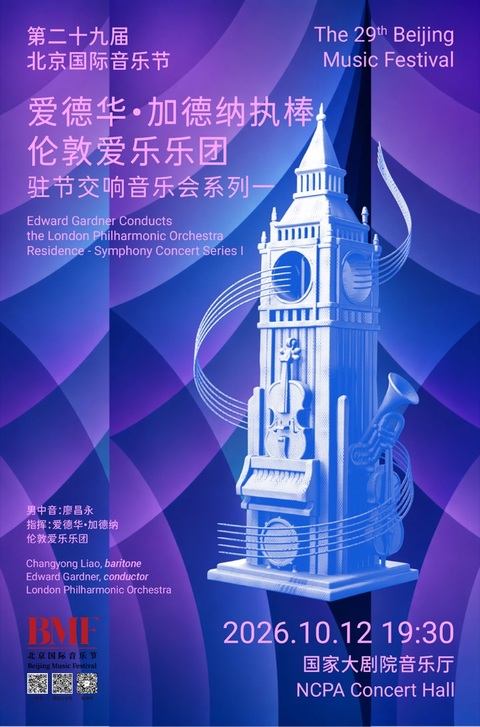
British Sounds Resound · Musical Grace Endures
Show Details
British Sounds Resound · Musical Grace Endures
Edward Gardner Conducts the London Philharmonic Orchestra in Residence — Symphony Concert Series I
19:30 · Monday, October 12, 2026 · NCPA Concert Hall
Edward Gardner, conductor · Changyong Liao, baritone · London Philharmonic Orchestra
From the Mists of Scotland to Figaro's Laughter
Highlights
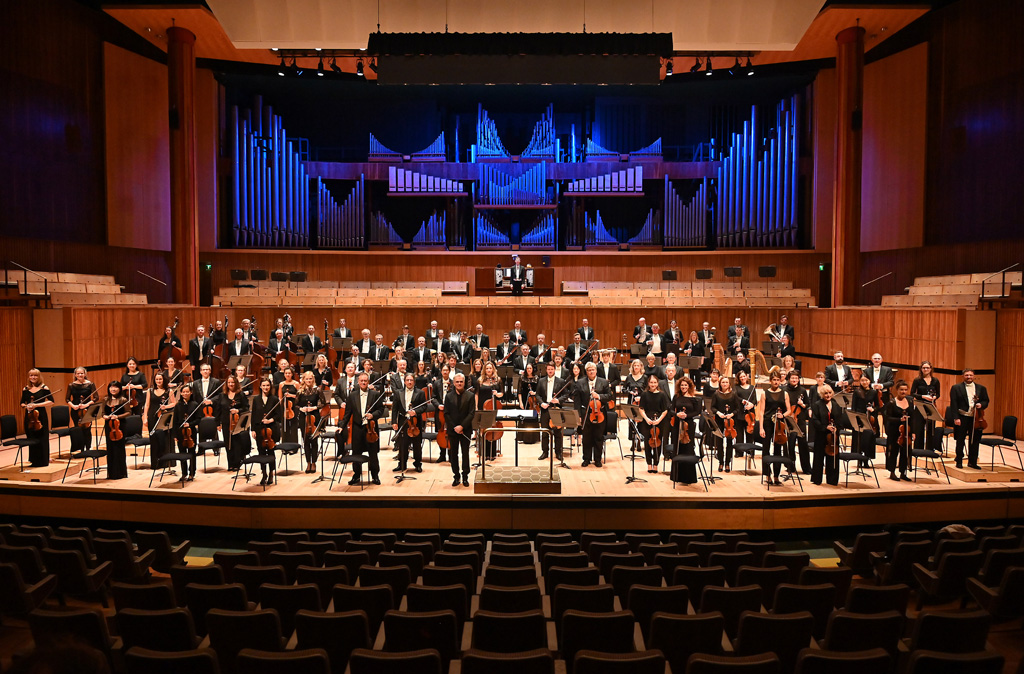
The London Philharmonic Orchestra, one of Britain's most celebrated ensembles, takes up residence at this year's festival, appearing over successive evenings under its Principal Conductor Edward Gardner with two carefully designed programs of authentic British orchestral sound. Tonight's concert is framed by Mendelssohn and Mozart, with the distinguished Chinese baritone Changyong Liao building a bridge between symphony and opera.
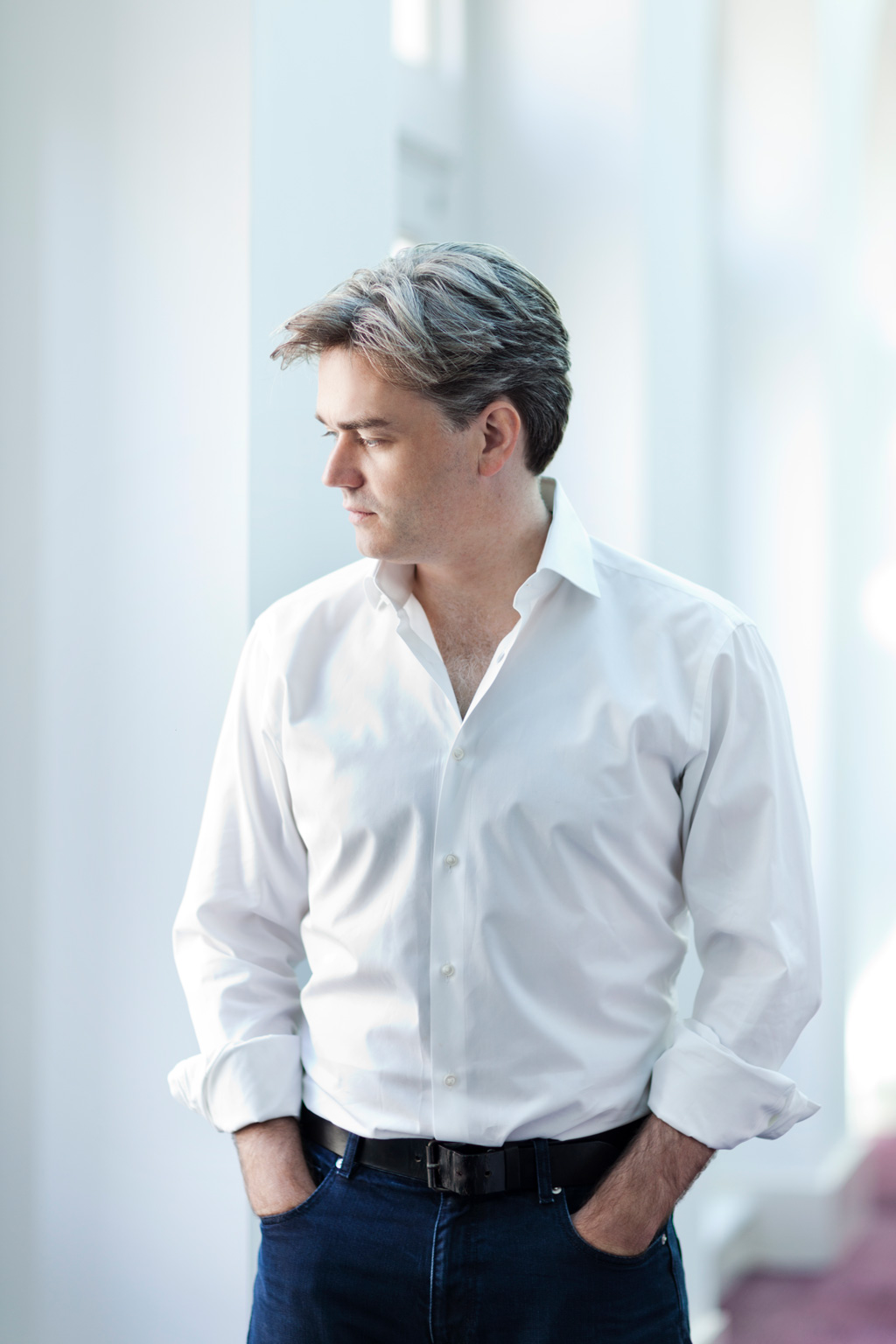
Edward Gardner, among the most dynamic of today's British conductors, is prized for his clarity of structure and a bright, supple orchestral sonority. In his hands Mendelssohn's “Scottish” Symphony conjures the mists of the Highlands and the brooding of ancient castles, then bursts into youthful exultation in the finale — a model of how Mendelssohn fused literary imagination, the impressions of travel and classical form into one.
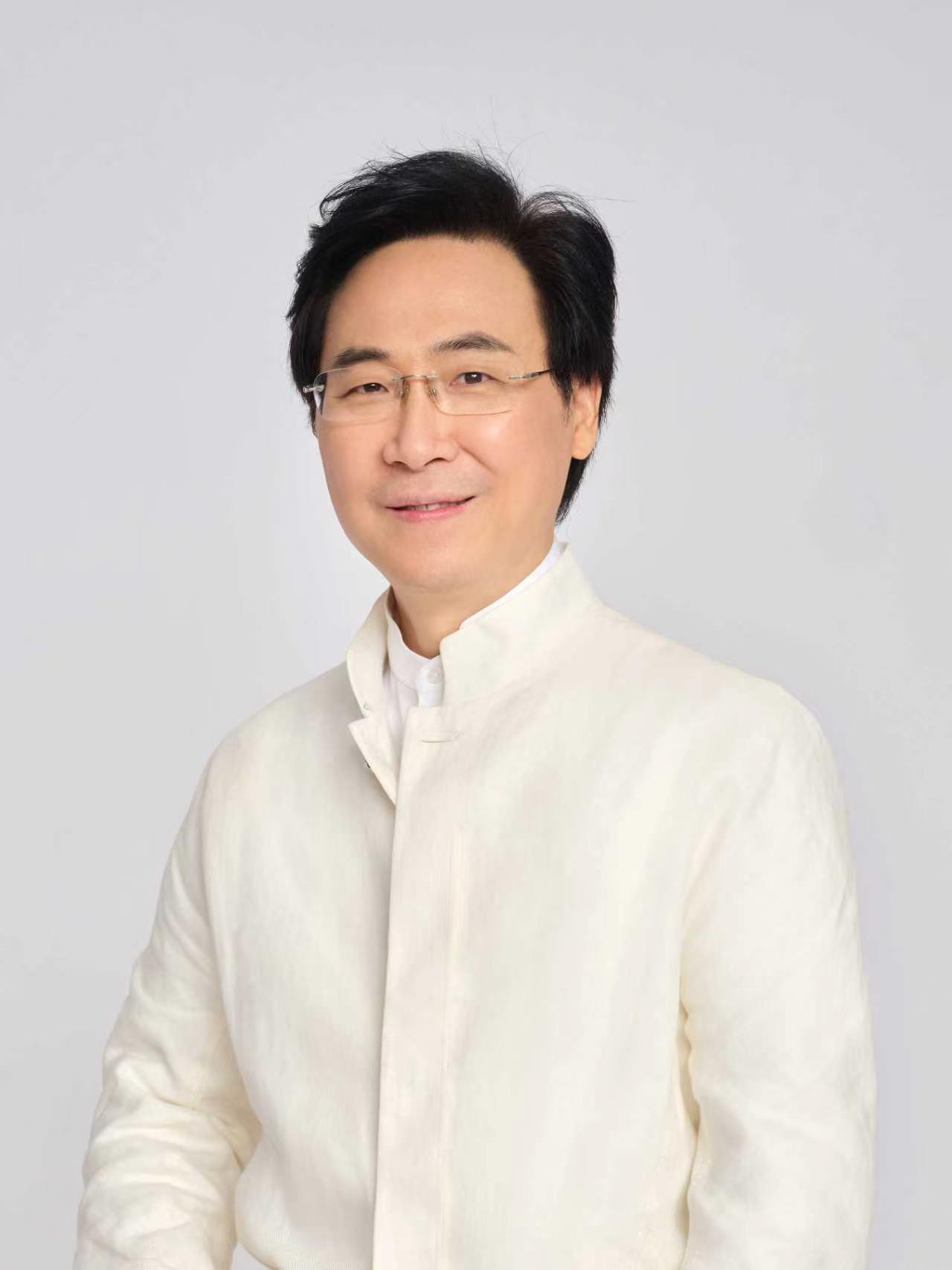
A special feature of the first half is a group of baritone arias from Mozart's The Marriage of Figaro, sung by Changyong Liao, the internationally renowned baritone and President of the Shanghai Conservatory of Music. From the Count's imperious swagger to Figaro's wit — now indignant, now sly — the four arias bring the two liveliest characters of this comic masterpiece vividly before us.
After the interval, Gardner and the LPO turn to Mozart's Symphony No. 40 in G minor — among the most beloved and most searching of his symphonies, its restless opening theme seizing the listener from the very first bar. From Scottish vastness through Figaro's mischief to G minor melancholy, the music of this evening builds, step by step, into one complete spectrum of feeling.
Founded in 1932 by the legendary Sir Thomas Beecham, the London Philharmonic Orchestra is one of Britain's great orchestras, famed for its warm, elastic string sound and its deep operatic pedigree — a pedigree that will be on display in this festival's The Magic Flute. Gardner himself is a man of the opera house, with an instinctive feel for the balance of voice and orchestra: no one better suited to thread Mendelssohn, Mozart arias and a Mozart symphony into a single evening.
Program Notes
Felix Mendelssohn Bartholdy: Symphony No. 3 in A minor, “Scottish,” Op. 56
In 1829 the twenty-year-old Mendelssohn traveled through Scotland. In the ruined chapel of Holyrood Palace in Edinburgh, he conceived the first ideas for this symphony, which he completed only in 1842 and dedicated to Queen Victoria. Though titled “Scottish,” the work is not a literal landscape painting; rather, the mists of the Highlands, the legends of ancient castles and the melancholy of the northern lands are fused into an atmosphere that permeates the entire work. Mendelssohn specifically requested that the four movements be performed continuously, allowing the symphony to unfold like a single, uninterrupted epic. From the darkly contemplative introduction and the scherzo shaped by a pentatonic scale with the flavor of a Scottish folk dance, through the tender slow movement and the dramatically charged finale, the work finally moves toward the light in a solemn, radiant coda resembling a hymn of triumph. Mendelssohn remained devoted to the British Isles throughout his life. The symphony not only honors Queen Victoria, but also embodies his romantic imagination of Scotland's landscapes and history — the atmosphere of splendor shadowed by violence, recalling the legends of Mary, Queen of Scots, is transformed into the music's pervasive undertone.
Wolfgang Amadeus Mozart: Baritone Arias from The Marriage of Figaro
The Marriage of Figaro (1786), Mozart's masterpiece created with librettist Lorenzo Da Ponte, turns a single day of scheming between the servant Figaro and the Count into a comedy rich in human and social insight. The four arias selected for this concert focus on the opera's two most vivid baritone characters. “Hai già vinta la causa” captures the Count's barely contained fury and arrogance upon learning that Figaro is to marry Susanna; “Aprite un po' quegli occhi” is Figaro's half-playful, half-bitter “advice” to men everywhere; “Non più andrai” sends the young page Cherubino off to military service in a witty, buoyant march; and “Se vuol ballare” is Figaro's brilliant declaration that he intends to make the Count “dance to his tune.” Together, the four arias sketch Mozart's little people's pride, cleverness and defiance. Based on Beaumarchais's comedy, once considered a work of the “eve of revolution,” Mozart's opera allows Figaro's intelligence and dignity to triumph over aristocratic power through music of incomparable beauty — a popular victory that still resonates today.
Wolfgang Amadeus Mozart: Symphony No. 40 in G minor, K. 550
In the summer of 1788, in one astonishing burst, Mozart wrote this symphony alongside Nos. 39 and 41, “Jupiter,” creating the final summit of his symphonic output. It is the only one of the three in a minor key — and one of only two minor-key symphonies he ever composed — which makes it especially moving. At the opening, over the violas' urgent accompaniment figure, the violins sing the famous anxious, sighing theme, drawing the listener immediately into an almost modern world of unease and passion. Without the splendor of trumpets and timpani, Mozart uses the most concentrated means to express melancholy, struggle and noble dignity. The four movements unfold beneath the shadow of G minor; even the elegant minuet carries a tragic tension. The work is often regarded as Mozart's most candid expression of his inner world, as well as one of the great Classical symphonies anticipating the emotional storm of Romanticism.
Liao Changyong|Baritone
Liao Changyong is President of the Shanghai Conservatory of Music, a National Second-Grade Professor, academic leader and doctoral supervisor. He is also a member of the National Committee of the Chinese People’s Political Consultative Conference, Vice-Chairman of the Chinese Musicians Association and Vice-President of the Chinese Opera Research Association.
One of the most distinguished baritones in modern China and Asia, Liao is an internationally renowned opera singer, opera performer and vocal music educator. He enjoys the reputation of being the “No. 1 Chinese baritone in the world”. He studied with the renowned vocal educators Professor Luo Wei and Professor Zhou Xiaoyan, known as the “godmother of Chinese vocal music”.
Liao has won numerous awards at major national and international vocal competitions. In 1996 and 1997, he won first prizes at the 41st Toulouse International Singing Competition, the Plácido Domingo World Opera Competition and the Queen Sonja International Music Competition, becoming the first Chinese singer to win consecutively at several of the world’s most prestigious vocal competitions.
He has performed in more than 30 operas and appeared with leading artists including Plácido Domingo, José Carreras, Ruth Ann Swenson, Yu Long and Lü Jia, as well as with dozens of the world’s leading orchestras. Plácido Domingo has praised him as “the best baritone I have ever heard” and “a genuine, China-made, world-class singer”. International media including The New York Times have also acclaimed his artistry.
In recent years, Liao has devoted himself to the discovery, compilation and promotion of Chinese art songs. As Director of the China Vocal Music Art Center, he has led the publication of the album series A Centennium of Chinese Art Songs and Tribute to the Classics, as well as related concert projects.
His Chinese Art Song Concerts have toured leading venues around the world, including the Elbphilharmonie, the Gewandhaus, the Berlin Konzerthaus and the Laeiszhalle in Germany, the Teatro Sociale di Como in Italy, the Sydney Opera House in Australia and the Savonlinna Opera Festival in Finland.
Together with faculty members and students of the Shanghai Conservatory of Music, Liao is committed to telling authentic Chinese stories, preserving and promoting traditional Chinese musical culture, and bringing Chinese music to the world stage.

Edward Gardner|Conductor
“A conducting force to be reckoned with” (The New York Times), leading British conductor Edward Gardner is now in his sixth season as Principal Conductor of the London Philharmonic Orchestra and his third as Music Director of the Norwegian Opera and Ballet. A three-time Gramophone Award winner, he is also Honorary Conductor of the Bergen Philharmonic Orchestra, following a distinguished nine-year tenure as its Chief Conductor.
In the 2026/27 season, Gardner conducts ten concerts with the London Philharmonic Orchestra at the Royal Festival Hall and leads the orchestra on tours of China, Spain, Germany and the Netherlands. Highlights include Britten’s War Requiem, Schumann’s Das Paradies und die Peri, a semi-staged concert performance of George Benjamin’s Lessons in Love and Violence, and world premieres of new commissions by Mark Simpson and Judith Weir.
Gardner opens his 2026/27 season at the Norwegian Opera and Ballet with works by Nielsen and Beethoven, followed by Richard Strauss’s Elektra. He will also conduct Verdi’s Requiem and a new production of Wagner’s Das Rheingold at the Oslo Opera House. Over the next three seasons, he will lead the company’s complete, fully staged Ring cycle, including two complete cycles in two weeks.
Gardner remains in high demand as a guest conductor. This season, he makes debuts with the San Diego Symphony and Detroit Symphony, and returns to the Royal Scottish National Orchestra, Bavarian Radio Symphony, WDR Symphony, Netherlands Radio Philharmonic and Iceland Symphony. He also conducts a new production of Britten’s Death in Venice at the Bavarian State Opera.
Recent orchestral highlights include debuts with the Pittsburgh Symphony and Staatskapelle Berlin, as well as appearances with the Philadelphia Orchestra, Cleveland Orchestra, Chicago Symphony, San Francisco Symphony, Dallas Symphony, National Symphony Orchestra of Washington, DC, Bavarian Radio Symphony, Berlin Radio Symphony Orchestra, Danish National Symphony Orchestra and Netherlands Radio Philharmonic.
Gardner has previously conducted the New York Philharmonic, Leipzig Gewandhaus Orchestra, Deutsches Symphonie-Orchester Berlin and Milan’s Orchestra del Teatro alla Scala. In the UK, he maintains longstanding relationships with the City of Birmingham Symphony Orchestra, where he was Principal Guest Conductor from 2010 to 2016, and the BBC Symphony Orchestra, which he has conducted at both the First and Last Nights of the BBC Proms.
A major figure in the opera world, Gardner served as Music Director of English National Opera from 2007 to 2015. He has conducted productions at the Royal Opera House, Metropolitan Opera, Bavarian State Opera, Lyric Opera of Chicago, Glyndebourne Festival Opera, Opéra National de Paris, La Scala and Tiroler Festspiele Erl.
Gardner is a prolific recording artist. His recordings include Tippett’s The Midsummer Marriage with the London Philharmonic Orchestra, Britten’s Peter Grimes with the Bergen Philharmonic Orchestra, Wagner’s Der fliegende Holländer, Richard Strauss’s Salome and Tania León’s Raíces (Origins). He has won three Gramophone Awards, including Best Opera Recording for Der fliegende Holländer in 2025.
A passionate supporter of young talent, Gardner founded Manchester’s Hallé Youth Orchestra in 2002. He maintains close relationships with the National Youth Orchestra of Great Britain, Juilliard School and the Royal Academy of Music, where he was appointed inaugural Sir Charles Mackerras Conducting Chair in 2014.
Edward Gardner was born in Gloucester, England, in 1974. After graduating from the University of Cambridge and the Royal Academy of Music, he gained early recognition as Assistant Conductor of the Hallé and Music Director of Glyndebourne Touring Opera. His honours include the Royal Philharmonic Society’s Conductor of the Year Award, an Olivier Award for Outstanding Achievement in Opera, the Sibelius Prize and an OBE for Services to Music.

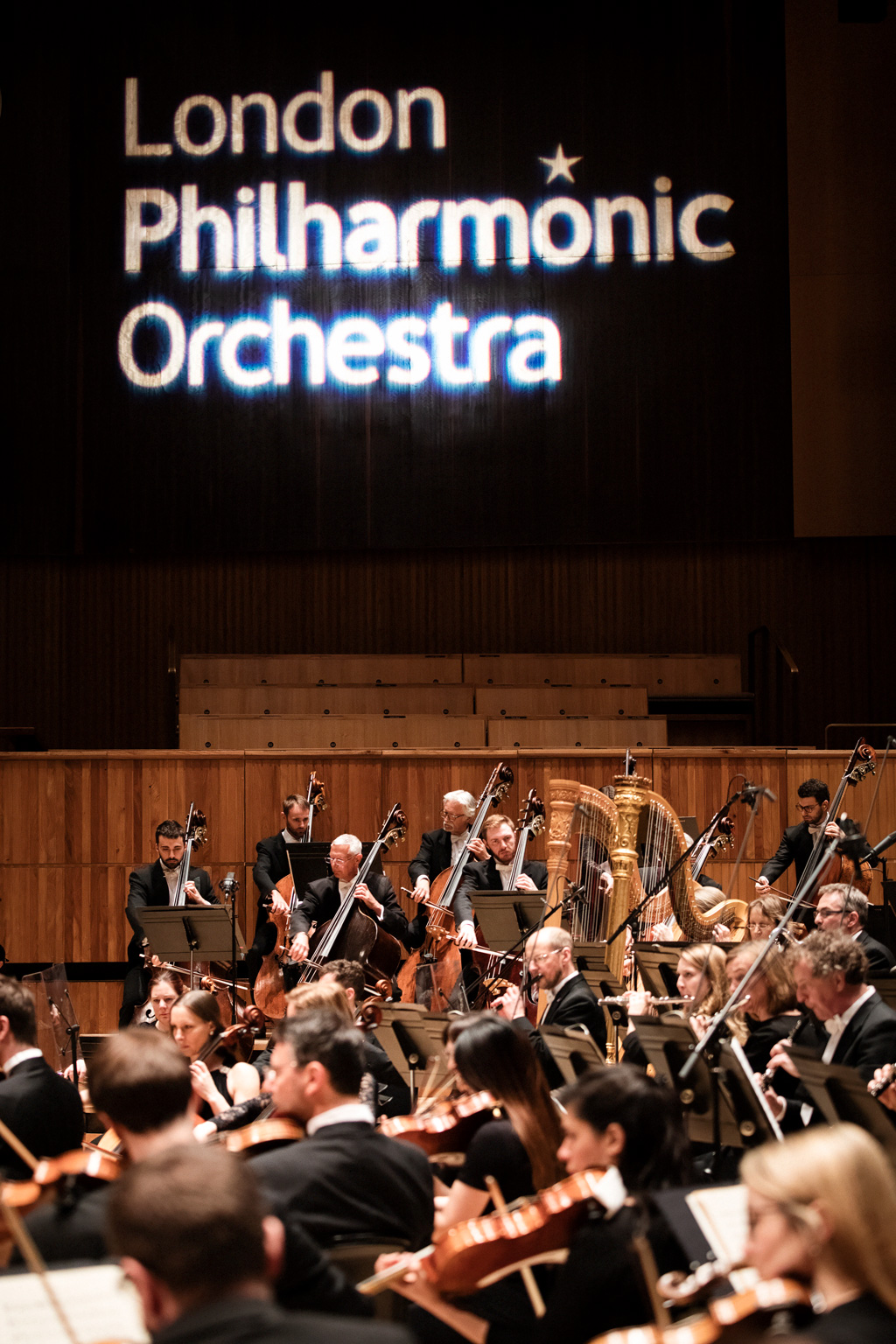
London Philharmonic Orchestra
Founded in 1932, the London Philharmonic Orchestra is recognised as one of the world’s leading orchestras, celebrated for its artistic excellence, versatility, invention and inclusivity. Its mission is to create unrivalled orchestral experiences on stage and cultivate human connections beyond it.
The orchestra achieves this through exceptional live performances, pioneering education and community projects, acclaimed recordings, online activity and international tours, cementing its position as a leading orchestra for the 21st century.
The orchestra’s home is the Southbank Centre’s Royal Festival Hall, where it is at the heart of London’s cultural life. It also performs regularly in Brighton, Eastbourne and Saffron Walden, as well as on tour worldwide. For more than 60 years, the London Philharmonic Orchestra has been the Resident Symphony Orchestra at Glyndebourne Festival Opera.
The London Philharmonic Orchestra has accompanied many memorable moments in modern cultural history, from performing national anthems at the medal ceremonies of the London 2012 Olympic and Paralympic Games, to its iconic recording with Pavarotti that helped make Nessun Dorma a global football anthem. The orchestra has also featured on major film soundtracks, including The Lord of the Rings.
One of the world’s most-streamed orchestras, the LPO receives more than 15 million plays of its online content each month. It is the most followed UK orchestra on Instagram and one of the most followed orchestras globally on TikTok. Its 2024 Sky Arts documentary series, Backstage with the London Philharmonic Orchestra, was nominated for a 2025 BAFTA Award.
The orchestra’s Principal Conductors have included Sir Adrian Boult, Bernard Haitink, Klaus Tennstedt and Kurt Masur. Edward Gardner became its 13th Principal Conductor in 2021. Vladimir Jurowski is Conductor Emeritus, Karina Canellakis is Principal Guest Conductor and Sir George Benjamin is Composer-in-Residence.
The LPO is committed to nurturing the next generation of musicians and music lovers through concerts, workshops, teaching resources and training programmes. Its OrchLab and Open Sound Ensemble projects create music-making opportunities for people with disabilities and special educational needs.
The LPO Junior Artists programme supports young players from under-represented backgrounds, while the LPO Young Composers, Future Firsts and LPO Conducting Fellowship programmes help emerging musicians and conductors progress from education into professional careers.
The 2026/27 season is themed “In Search of Purpose”, exploring human resilience and the quest for meaning. The season includes Britten’s War Requiem, Stravinsky’s The Firebird, Elgar’s The Dream of Gerontius and George Benjamin’s opera Lessons in Love and Violence.
The orchestra will also undertake tours to China, Spain, Germany, Belgium, the Netherlands and the Canary Islands, alongside performances and community events in Brighton, Eastbourne and Saffron Walden.
British Sounds Resound · Musical Grace Endures
Edward Gardner Conducts the London Philharmonic Orchestra in Residence — Symphony Concert Series I
Felix Mendelssohn Bartholdy:
Symphony No. 3 in A minor, “Scottish,” Op. 56
40′
Wolfgang Amadeus Mozart:
Arias for baritone, from Le nozze di Figaro
14′
Hai già vinta la causa
Aprite un po' quegli occhi
Non più andrai
Se vuol ballare
—Intermission—
Wolfgang Amadeus Mozart:
Symphony No. 40 in G minor, K. 550
30′
Changyong Liao, baritone
Edward Gardner, conductor
London Philharmonic Orchestra
Approximate total duration: 99 mins (including 15 mins intermission)
The program is subject to change
 Wechat Video
WeChat Official Account
WeChat Mini Program
Wechat Video
WeChat Official Account
WeChat Mini Program
 Redbook
 Tiktok